Muscle Recovery for Home Gym Training: Sleep, Foam Rolling and Rest Days Explained
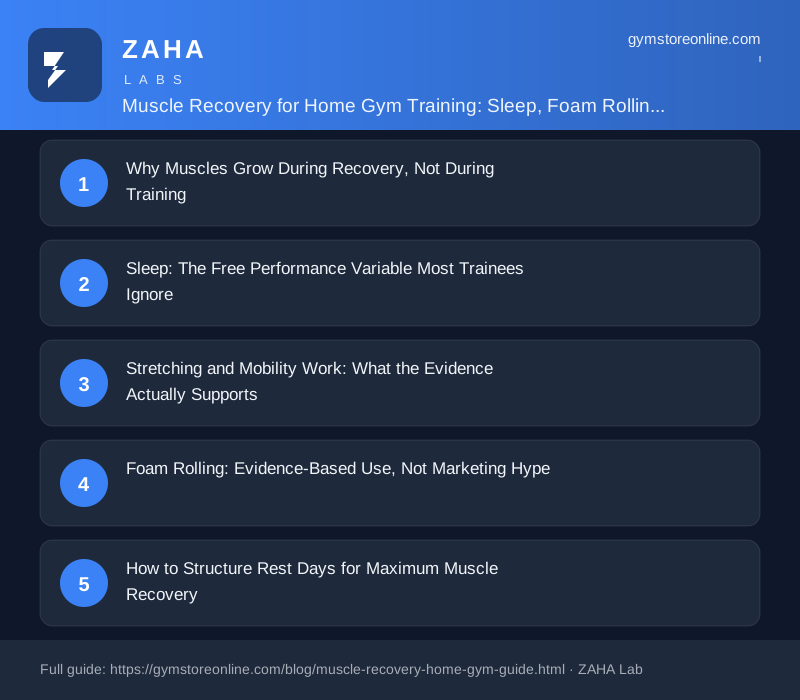
Your muscles are not growing while you lift — they are growing while you sleep and rest. Muscle recovery is where adaptation actually happens, and most home gym trainees are leaving gains on the table by adding sessions when they should be adding rest.
Why Muscles Grow During Recovery, Not During Training
Resistance training creates micro-tears in muscle fibres and depletes energy stores. The training stimulus is necessary — but it is the signal, not the adaptation. Muscle protein synthesis (MPS), the process by which your body rebuilds fibres thicker and stronger, peaks 24–48 hours post-session and can remain elevated for up to 72 hours after heavy compound work. Without adequate recovery time, you interrupt that process and accumulate fatigue faster than you accumulate adaptation.
This matters especially for home gym trainees, who often add a session simply because the equipment is there and they have the time. The research is consistent: past a certain training volume, more sessions reduce — not increase — the rate of progress. Recognising that rest is a training variable, not a gap in your programme, is the shift that unlocks long-term results.
Sleep: The Free Performance Variable Most Trainees Ignore
A 2011 study published in Sleep found that athletes who extended nightly sleep to 10 hours showed measurable improvements in sprint times, reaction times and mood scores. For strength training specifically, the mechanism is hormonal: growth hormone secretion — the primary driver of muscle repair — occurs predominantly during slow-wave (deep) sleep. Cut sleep short and you cut the recovery window short.
- Target 7–9 hours per night for recreational lifters. High-volume programmes warrant the upper end.
- Consistency matters more than duration. A regular sleep window — same bed time, same wake time — improves sleep quality independently of total hours by stabilising your circadian rhythm.
- Cool and dark. A room temperature around 18°C and blackout conditions are the two most evidence-supported environmental factors for improving slow-wave sleep depth.
- Avoid intense training within two hours of bed. The core temperature elevation from a hard session delays sleep onset by up to 45 minutes in controlled studies.
Stretching and Mobility Work: What the Evidence Actually Supports
Static stretching after a session does not prevent delayed onset muscle soreness (DOMS) — the research on that question is settled, and the effect is essentially zero. What stretching does do, consistently, is maintain and improve range of motion over time. Greater range of motion reduces injury risk and allows you to train through fuller ranges of movement, which is directly linked to greater hypertrophy stimulus.
For home gym training, a 10–15 minute post-session mobility routine targeting the muscles you just trained is time well spent:
- Hip flexors and thoracic spine after squats, deadlifts or Romanian deadlifts.
- Pec and anterior shoulder stretches after any pressing work — desk workers accumulate chronic anterior tightness here that compounds into shoulder problems over months of training.
- Hamstring and calf work after leg days, particularly if you spend long hours sitting between sessions.
One rest day per week dedicated to a 20–30 minute full-body mobility flow has solid support in the sports science literature for reducing perceived soreness and — more importantly — maintaining training consistency over the long term by keeping minor niggles from becoming actual injuries.
Foam Rolling: Evidence-Based Use, Not Marketing Hype
Foam rolling (self-myofascial release) attracts both excessive claims and excessive scepticism. Here is what the evidence actually supports: used before training, foam rolling modestly improves range of motion without the force-output reduction associated with prolonged static stretching. Used after training, it appears to reduce perceived muscle soreness at 24 and 48 hours post-exercise across multiple trials and meta-analyses.
A practical protocol that holds up to scrutiny:
- One to two minutes per major muscle group, moving slowly and pausing on tender areas for 20–30 seconds.
- Apply moderate pressure. Pain that causes you to brace and hold your breath defeats the purpose — the goal is parasympathetic downregulation, not additional mechanical stress on already-stressed tissue.
- Lacrosse or massage balls outperform foam rollers for glutes, piriformis, upper back and plantar fascia, where a roller cannot isolate the area precisely enough.
- Pre-training rolling is best reserved for chronically tight areas. Post-training rolling across the session's target muscles is the more widely supported use case.
How to Structure Rest Days for Maximum Muscle Recovery
A complete rest day — no structured training — is necessary at least once per week for most programmes. Two full rest days suits high-volume phases or when accumulated fatigue is clearly present: persistent soreness, declining motivation, or weights that felt routine the previous week now feeling heavy. These are not signs of weakness; they are physiological data.
Active recovery on rest days means low-intensity movement that promotes blood flow without adding meaningful mechanical load: a 20–30 minute walk, a light swim, steady cycling at conversational pace, or the mobility session described above. Heart rate should stay well below 60% of max. The goal is circulation and recovery — not calorie burn or additional conditioning stimulus.
Two reliable markers that indicate an unscheduled rest day is warranted: grip strength noticeably down from your usual baseline (grip tracks systemic fatigue well), or resting heart rate elevated by five or more beats per minute on waking. Both indicate your nervous system has not recovered. An extra session on those days extends the fatigue cycle rather than breaking it.
Gear Worth Considering
You do not need much to build an effective home recovery toolkit. These three items have the best practical impact-to-cost ratio for home gym trainees:
- [HIGH-DENSITY FOAM ROLLER — 45cm or 90cm]: High-density EVA foam holds its shape over months of use where budget rollers compress immediately and lose effectiveness. The 90cm length is worthwhile for thoracic spine work where you need width. Available on Amazon UK from multiple brands — filter specifically for high-density EVA.
- [MASSAGE BALLS / LACROSSE BALLS — pack of 2]: More precise than a foam roller for glutes, piriformis and upper back. A peanut-shaped double ball is useful for either side of the thoracic spine without rolling directly on vertebrae. Sold individually or in pairs; the two-ball format is better value for home use.
- [NON-SLIP YOGA MAT — 6mm, 183cm]: For floor-based mobility, stretching and foam rolling work. Six millimetres is the practical sweet spot — stable enough for balance work, cushioned enough for knees and hips on hard floors. NBR or TPE materials outlast basic PVC for regular home gym use.
FAQ: Muscle Recovery and Mobility for Home Gym Trainees
How many rest days do I need each week?
For most recreational lifters training three to five days per week, two rest days is a sensible minimum. High-volume programmes (five or more days) typically require two full rest days plus one or two active recovery days to sustain progress without accumulating systemic fatigue. The goal is the minimum effective rest that allows you to perform well — and remain injury-free — in your next session.
Should I stretch before or after training?
Dynamic stretching — leg swings, arm circles, hip openers through range — belongs before training. It prepares joints and increases range of motion without reducing force output. Static stretching (holding a position for 30 or more seconds) is better placed after training, when muscles are warm and you have no immediate strength requirement. Static stretching before heavy lifting is associated with modest short-term strength reductions in the research literature.
Does foam rolling actually reduce muscle soreness?
The evidence says yes, modestly. Multiple meta-analyses show foam rolling reduces perceived DOMS at 24 and 48 hours post-exercise compared to no intervention. The effect is real but moderate — it is a useful component of a broader recovery protocol rather than a standalone fix for poor programming or insufficient sleep.
How much does sleep actually affect muscle growth?
Substantially. Sleep restriction studies consistently show increased cortisol, decreased testosterone and reduced anabolic signalling with as little as five consecutive nights of sleeping under six hours. Growth hormone release is tightly coupled to slow-wave sleep, so shortening sleep directly reduces the hormonal environment required for muscle repair. For natural trainees, sleep quality is arguably the single highest-leverage recovery variable available — and it costs nothing.